Logging In, Leaking Out: The Privacy Cost Hidden Inside Your Security Layer
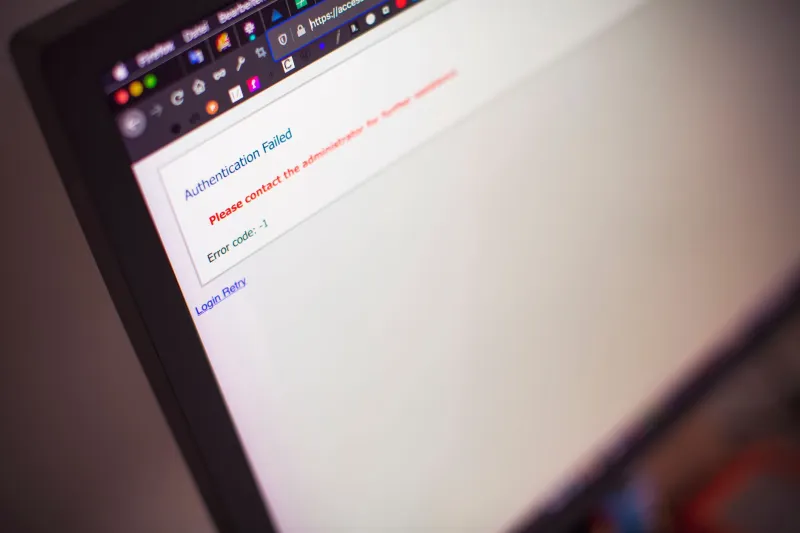
For years, the standard advice from cybersecurity professionals has been consistent: use strong, unique passwords and enable multi-factor authentication on every account that supports it. That guidance remains technically sound. But it arrives with a footnote that rarely gets printed — one that concerns not the strength of your credentials, but the depth of the profile being assembled every time you use them.
Authentication, it turns out, is not merely a gate. It is also a sensor.
The Moment You Log In, the Data Collection Begins
When you enter a password and confirm your identity through a second factor — a text message code, an authenticator app, a biometric scan — the platform on the other end is recording far more than a successful verification. It is capturing the timestamp of your attempt, the device you used, the operating system and browser version that device is running, your IP address and the geolocation it implies, and how long it took you to complete each step.
This is not a hidden corporate secret. Most major platforms describe this collection somewhere in their privacy policies, under language about "security purposes" and "fraud prevention." What those disclosures rarely clarify is how granular the resulting profile becomes over time, or how that data may be used beyond its stated purpose.
Over weeks and months, your login pattern becomes a behavioral signature. You tend to authenticate from the same two or three devices. You log in at predictable times. You complete the second-factor step in a characteristic number of seconds. You use a backup email address or phone number that connects to other accounts. Each of these data points, individually unremarkable, combines into something considerably more valuable — a behavioral fingerprint that can be used to identify you even when you believe you are operating anonymously elsewhere.
What Platforms Actually Do With Authentication Data
The stated rationale for collecting login metadata is legitimate: detecting account takeovers, flagging unusual access attempts, and building risk models that can distinguish the account owner from an unauthorized user. These are genuine security functions, and they depend on accumulated behavioral data to work effectively.
The problem is that the same infrastructure supporting those security functions also supports advertising personalization, cross-platform identity resolution, and, in some cases, data sharing with third-party partners. A login event that triggers a risk assessment also updates an advertising profile. The device fingerprint used to verify that you are who you claim to be is the same fingerprint used to track you across unrelated websites.
SMS-based two-factor authentication introduces an additional layer of exposure. When a platform sends a verification code to your phone number, it confirms the association between your account and that number — and your carrier, which processes the message, logs the transaction. Phone numbers have become one of the most persistent identifiers in commercial data ecosystems, routinely traded between data brokers and used to link records across platforms that would otherwise have no connection to one another.
Backup Methods as Data Bridges
The backup authentication options that platforms encourage users to establish — recovery email addresses, secondary phone numbers, trusted contacts — function as data bridges between otherwise separate accounts and identities. When you designate a Gmail address as your recovery email for a financial account, you are creating a documented link between those two identities that exists in at least two companies' databases.
This is not a theoretical risk. Data brokers actively harvest these associations. Security researchers have demonstrated that recovery contact information provided for authentication purposes frequently appears in commercial identity graphs — the comprehensive databases that aggregate personal data from hundreds of sources to build detailed profiles of individual consumers.
The irony is pointed: the very steps platforms recommend to make your account more recoverable are the same steps that make your identity more legible to the commercial surveillance ecosystem.
Authentication Alternatives That Protect More Than They Expose
None of this means that multi-factor authentication should be abandoned. The security benefit is real, and accounts without a second factor remain substantially more vulnerable to compromise. The question is whether there are approaches that deliver comparable protection while generating less exploitable data.
Several alternatives merit serious consideration.
Hardware security keys, such as those conforming to the FIDO2 standard, authenticate through a cryptographic exchange that does not transmit a code over a network. The key confirms your presence without revealing behavioral metadata to the platform, and without involving a phone carrier. Brands such as YubiKey and Google's Titan key are widely available and compatible with most major platforms. The tradeoff is the upfront cost and the physical inconvenience of carrying a small device.
Time-based one-time password (TOTP) apps — including open-source options such as Aegis on Android or Raivo on iOS — generate authentication codes locally on your device without communicating with the app developer's servers. Unlike proprietary authenticator apps offered by major platforms, these tools do not report usage data back to a corporate parent.
Passkeys, a newer authentication standard gaining adoption across major platforms, replace passwords entirely with device-bound cryptographic credentials. When implemented well, passkeys reduce the behavioral data transmitted during authentication while offering strong resistance to phishing. Their privacy characteristics vary depending on how a given platform has implemented the standard, so some scrutiny is warranted before treating all passkey implementations as equivalent.
Avoiding SMS-based verification wherever possible is perhaps the most straightforward step available to most users. SMS codes are the weakest form of second-factor authentication from a security standpoint and the most data-intensive from a privacy standpoint. Replacing them with a TOTP app or hardware key eliminates carrier involvement and reduces the exposure of your phone number as an identity anchor.
Weighing the Tradeoff Honestly
Digital security and data privacy are frequently described as complementary values, and in many respects they are. But the infrastructure through which security is implemented often serves commercial interests that have nothing to do with protecting the user. Authentication systems sit at the intersection of these competing pressures — they are genuinely useful for security, and they are genuinely useful for surveillance.
The appropriate response is not to opt out of security measures, but to select the implementation that achieves the security goal with the least collateral data exposure. That means preferring hardware keys and TOTP apps over SMS codes, scrutinizing what your authenticator app's developer does with usage data, and thinking carefully before registering recovery contacts that connect otherwise separate identities.
Owning your data means examining not just what you share voluntarily, but what is extracted from the mechanics of protecting what you already have. The login screen is not a neutral threshold. It is, for many platforms, one of the most productive data collection points in the entire user relationship — and understanding that changes how you should approach it.