Unlocking the Risk: What Your Fingerprint and Face Are Really Doing Inside Your Devices
There is something intuitively appealing about using your own body as a key. No password to forget, no PIN to fumble with in the dark. A glance at your phone and it opens. A rested thumb on a sensor and your laptop springs to life. Biometric authentication feels personal, intimate, and therefore safe.
It is none of those things — at least not in the way most users assume.
The technology underpinning fingerprint sensors, facial recognition systems, and iris scanners is genuinely sophisticated. But sophistication is not the same as security, and convenience is rarely the same as protection. What the marketing around biometric authentication consistently underplays is that your body, once digitized, becomes a data asset — one that you cannot rotate, revoke, or reset after a breach.
What Biometric Authentication Actually Captures
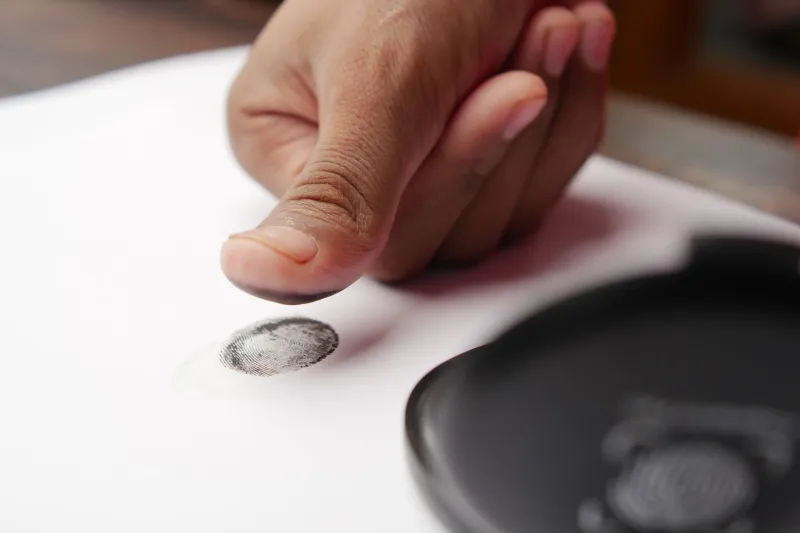
When you enroll your fingerprint on a smartphone or configure facial recognition on a laptop, the device does not store a photograph of your face or a literal image of your fingerprint. It converts your biological features into a mathematical template — a numerical representation of the unique geometry of your face, the ridge patterns of your finger, or the texture of your iris.
This distinction matters, but it matters less than manufacturers suggest. A mathematical template derived from your face is still a representation of your face. If that template is extracted, reverse-engineered, or used to reconstruct a workable facsimile, the underlying biometric data has been compromised. Researchers have demonstrated that high-resolution fingerprint reconstructions can be derived from stored templates under certain conditions, and that facial recognition models can be fooled using printed photographs or three-dimensional masks in ways that undermine the assumed reliability of the technology.
The question of where these templates are stored is equally important. Apple's Secure Enclave and Android's Trusted Execution Environment are hardware-level storage solutions designed to keep biometric data isolated from the main operating system and, critically, from the internet. When these systems work as intended, your biometric template never leaves your device. That is the ideal scenario.
But devices are not the only place biometric authentication happens.
When Biometrics Leave the Device
The on-device model applies primarily to consumer smartphones and laptops from major manufacturers. Beyond that narrow category, the picture changes considerably.
Many employers now use biometric time-and-attendance systems that collect fingerprint or facial recognition data and store it in centralized databases — sometimes managed by third-party vendors with their own security practices and data retention policies. Illinois, Texas, and Washington have enacted biometric privacy laws requiring explicit consent and limiting how long this data can be retained, but the majority of US states have no equivalent protections. Employees in those states often have no legal recourse if their biometric data is mishandled.
Smart home devices increasingly incorporate facial recognition features. Some video doorbells and home security cameras now offer the ability to identify familiar faces, which requires storing facial geometry data somewhere — often in a cloud environment operated by the device manufacturer. That data is subject to the manufacturer's privacy policy, which may permit sharing with law enforcement, advertising partners, or successor companies following an acquisition.
Airports and border crossings operated by US Customs and Border Protection use facial recognition to match travelers against government databases. The biometric data collected in those encounters enters federal systems with retention periods and access controls that are not fully transparent to the public.
The Irreversibility Problem
Passwords have a fundamental advantage over biometric credentials that is rarely discussed in the context of security marketing: they can be changed.
If your email password is exposed in a data breach, the remediation is straightforward — you change the password and the old credential becomes worthless. The breach is serious, but it is recoverable.
Your fingerprints cannot be changed. Your facial geometry cannot be updated with a new version. Your iris pattern will remain constant for your lifetime. If a database containing your biometric template is breached — and biometric databases have been breached, most notably the 2019 exposure of over one million fingerprints and facial recognition data from the Biostar 2 platform used by banks, police forces, and defense contractors — the compromise is permanent. There is no patch for your biology.
This irreversibility transforms what might otherwise be a manageable security incident into a lifelong vulnerability. Attackers who obtain your biometric template do not need to use it immediately. They can hold it, trade it, or deploy it years later when the authentication system it targets has evolved enough to make the original capture useful.
The Legal Landscape Is Incomplete
For US consumers, legal protections around biometric data remain fragmented and inconsistent. The Illinois Biometric Information Privacy Act (BIPA) is the most comprehensive state-level framework, granting individuals the right to sue companies that collect or misuse their biometric data without consent. It has resulted in significant settlements against companies including Facebook, Google, and TikTok.
But BIPA applies only in Illinois. A federal biometric privacy law has been discussed in Congress for years without passage. In the absence of uniform national standards, companies operating across state lines face a patchwork of obligations that often results in the weakest applicable standard becoming the default.
This regulatory gap means that when you enroll your fingerprint with a fitness center, a workplace system, or a third-party app, the protections governing what happens to that data depend almost entirely on where you happen to live.
Practical Steps Toward a More Considered Approach
None of this means biometric authentication should be abandoned wholesale. On-device biometrics implemented by reputable manufacturers provide a genuine usability benefit and, when properly isolated in secure hardware, represent a reasonable tradeoff for many users. The concern is not the technology in its most constrained form — it is the broader ecosystem into which biometric data flows when it leaves that controlled environment.
Several practices can reduce your exposure without requiring you to abandon fingerprint authentication entirely.
First, audit where your biometric data actually goes. Distinguish between on-device authentication — where the template stays on your phone or laptop — and cloud-dependent systems where enrollment data is transmitted to a remote server. Treat the latter with significantly more caution.
Second, read the privacy policies of any third-party application or service requesting biometric enrollment. Look specifically for clauses governing data sharing, retention periods, and what happens to your data if the company is sold or acquired.
Third, consider whether biometric authentication is genuinely necessary in a given context. For unlocking your personal smartphone, the convenience-to-risk ratio may be acceptable. For enrolling with a gym, a workplace contractor, or a loyalty program app, the calculus is different — the benefit is marginal and the data handling is far less transparent.
Finally, stay informed about the legal frameworks governing biometric data in your state. Organizations including the Electronic Frontier Foundation and the American Civil Liberties Union track biometric privacy legislation and enforcement actions. Knowing your rights is a prerequisite for exercising them.
The Body as a Credential
The premise of biometric authentication is that your body is the most secure identifier imaginable because it is uniquely yours. That premise is partially correct. Your biometric characteristics are unique. But uniqueness is not the same as security when the digital representation of those characteristics can be captured, stored, transmitted, and compromised like any other data file.
The convenience of touching a sensor instead of typing a password is real. So is the tradeoff. Your fingerprint, once it enters a database you do not control, is no longer just yours. It belongs, at least in part, to whoever holds that database — and to whoever manages to take it from them.