Always Listening, Always Learning: What Your Voice Assistant Knows That You've Never Told It
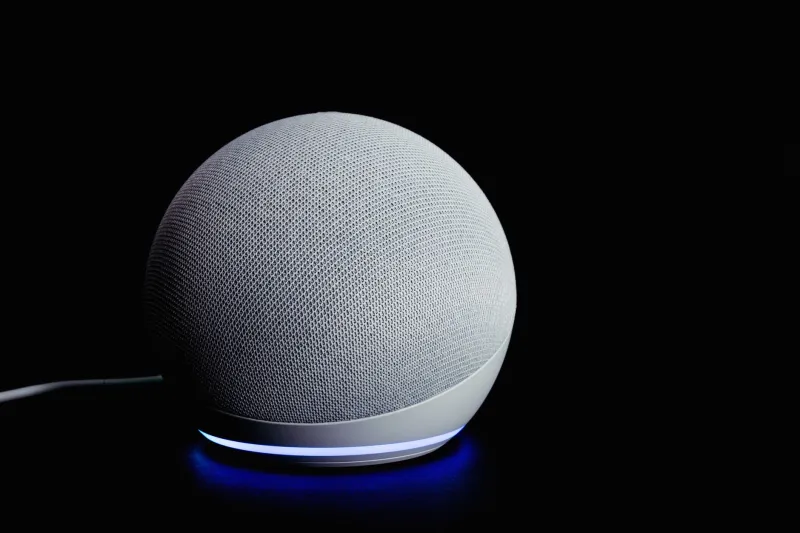
Amazon's Alexa, Google Assistant, and Apple's Siri have collectively found their way into more than 150 million American homes. They dim lights, set timers, answer trivia questions, and order household supplies without requiring a single tap on a screen. The pitch is frictionless living — and for most users, it delivers exactly that.
What the marketing materials are far less forthcoming about is the nature of the exchange. Every interaction with a voice assistant is a data transaction. And over weeks, months, and years of daily use, those transactions accumulate into something far more revealing than any single conversation: a behavioral portrait of your household that manufacturers, advertisers, and in some cases third-party developers can access in ways most users have never considered.
The Mechanics of the Wake Word
Voice assistants are designed to remain in a low-power listening state at all times, waiting for a trigger phrase — "Alexa," "Hey Google," or "Hey Siri." The devices are not, in theory, recording and transmitting everything said within range. In practice, however, false activations are common. Background conversations, television audio, and ambient noise can all trigger a recording session without the user's awareness.
Once activated — whether intentionally or not — the device captures audio and transmits it to the manufacturer's servers for processing. Amazon, Google, and Apple all retain transcripts and, in some configurations, audio recordings of these interactions. Users can review and delete this data through account settings, but the default behavior on most devices is retention unless the user actively opts out.
A 2019 investigation by Bloomberg revealed that Amazon employed teams of human contractors to listen to and annotate Alexa recordings, including accidental captures of private conversations. Amazon confirmed the practice, framing it as a quality improvement measure. Google and Apple have engaged in similar annotation programs. The recordings reviewed by these contractors were linked to account information including the user's first name and device serial number — enough to make re-identification straightforward.
Behavioral Inference Beyond the Spoken Word
The data collected by voice assistants extends well beyond the content of explicit commands. The timing, frequency, and nature of requests combine to form a behavioral signature that reveals far more than users typically appreciate.
Consider what a device learns from a single week of ordinary household use. Morning requests for weather and traffic establish a daily schedule and approximate commute. Grocery and household supply orders map consumption habits and brand preferences. Music choices, podcast subscriptions, and audiobook requests indicate political leanings, cultural interests, and emotional states. Requests made late at night or during unusual hours suggest disruptions to routine — illness, stress, insomnia, or relationship tension.
Amazon has been particularly direct about the commercial application of this data. The company's advertising platform allows brands to target users based on voice assistant interactions, including purchase history and product research queries made through Alexa. The behavioral signals gathered through smart speakers feed directly into Amazon's broader advertising and product recommendation infrastructure — the same engine that already processes your search queries, purchase history, and browsing behavior on the platform.
Google's Assistant data integrates with the company's advertising systems in a comparable fashion. A household that regularly asks about restaurant recommendations, travel destinations, or home improvement projects becomes a segmented advertising target across Google's entire product ecosystem, from YouTube to Search to Gmail.
The Third-Party Layer
Beyond the manufacturers themselves, voice assistant platforms have opened their systems to thousands of third-party developers through "skills" (Amazon) and "actions" (Google). These integrations extend the device's functionality — enabling interactions with banking apps, healthcare services, smart home platforms, and retail outlets — but they also introduce additional data flows that operate under different privacy policies.
When a user enables a third-party skill, they often grant that developer access to interaction data, account information, and in some cases payment details. The privacy policies governing these third-party applications vary significantly and are rarely reviewed by users before activation. A banking skill, for instance, may share transaction data with analytics firms under terms buried in a terms-of-service document that few users will ever read.
The Federal Trade Commission has taken action against third-party skill developers in the past for deceptive data collection practices, but enforcement remains limited relative to the scale of the ecosystem.
What Manufacturers Are Not Required to Tell You
Under current US federal law, there is no comprehensive privacy statute governing how voice assistant manufacturers collect, retain, or monetize behavioral data. The California Consumer Privacy Act provides California residents with rights to access and delete their data, and several other states have passed or are considering similar legislation. But for the majority of Americans, the primary governance mechanism is the manufacturer's own privacy policy — a document that companies can and do update unilaterally.
This regulatory gap means that the data your household generates through years of voice assistant use could, in principle, be repurposed for uses not contemplated at the time of collection. It could also be disclosed in response to law enforcement requests, as Amazon has confirmed it has done on numerous occasions.
Practical Steps for Users Who Value Their Privacy
For households unwilling to abandon voice assistants entirely, several measures can meaningfully reduce the scope of data collection.
Review and delete your interaction history regularly. Amazon, Google, and Apple all provide tools within their account management portals to review and delete stored recordings and transcripts. Enabling automatic deletion on a rolling 3-month basis limits the depth of the behavioral record these companies maintain.
Disable personalized advertising based on voice data. Amazon's advertising preferences settings allow users to opt out of interest-based advertising derived from Alexa interactions. Google offers similar controls through its account settings.
Mute the microphone when not in use. All major smart speakers include a hardware mute button that physically disconnects the microphone. This is the only reliable method of preventing accidental activation and recording.
Audit your enabled skills and actions. Remove third-party integrations that you do not actively use. Each enabled skill represents an additional data flow with its own privacy terms.
Consider local-processing alternatives. A small but growing category of voice assistant hardware processes commands locally rather than transmitting audio to remote servers. Devices built on the open-source Home Assistant platform, for example, can be configured to handle the majority of smart home commands without sending data to a third-party cloud service.
Separate your smart home devices from your primary network. Placing voice assistants on a dedicated guest network limits their ability to interact with other devices on your home network and constrains the scope of data they can observe.
The Asymmetry at the Heart of the Bargain
The appeal of voice assistants is genuine. For households managing complex schedules, for individuals with mobility limitations, and for anyone who has ever wanted to add an item to a shopping list without interrupting what they were doing, the convenience is real and meaningful.
But the terms of that convenience deserve honest scrutiny. The behavioral data generated by years of voice assistant use is intimate in a way that few users fully appreciate when they first set up the device. It captures the rhythms of daily life — the questions asked in unguarded moments, the purchases made on impulse, the preferences revealed through thousands of small interactions — and delivers that information to corporations whose commercial interests are not aligned with your privacy.
Owning your data begins with understanding where it goes. In the case of voice assistants, it travels further, and is retained longer, than most users ever imagine.